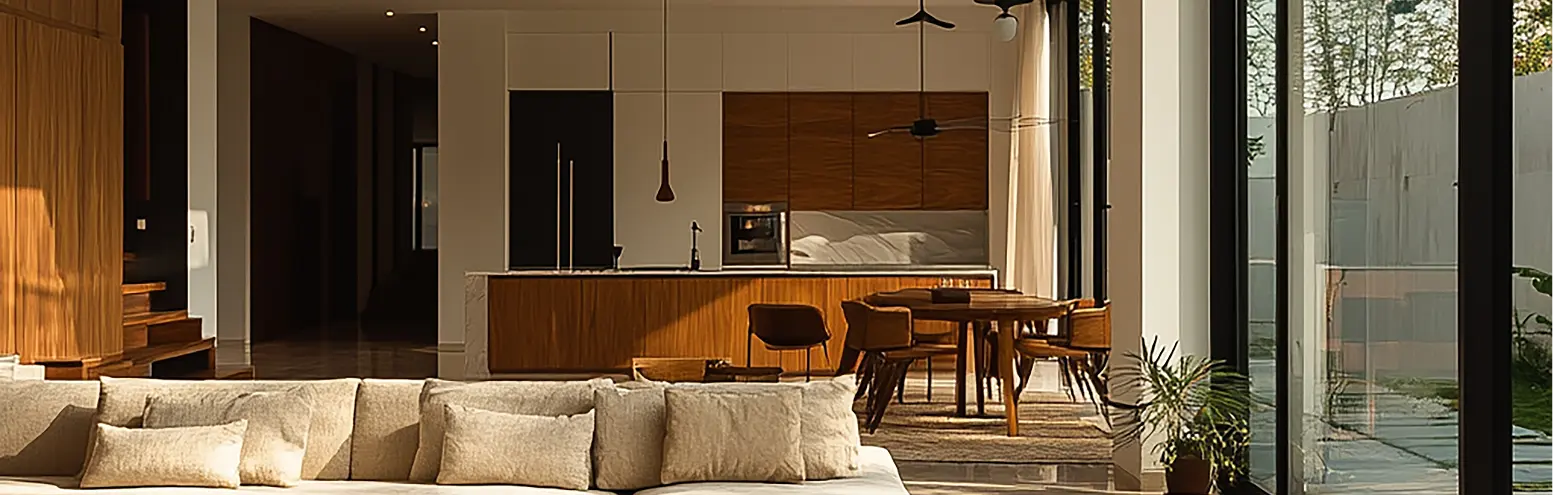
The future of housing is changing rapidly. The new generations are looking for spaces that not only fulfill basic functions, but also adapt to their lifestyle, their way of working and their vision of well-being. Today, the home is no longer just a place to live: it is a refuge, office, meeting point and setting for family construction. These are the trends that are defining how we will live in the coming years and that are already beginning to be seen in the most visionary residential projects in the country.
Looking to the future
The way we live is changing, and with it, expectations about home. Today, families are looking for more humane, sustainable and flexible solutions; spaces that accompany real life and adapt to what is to come. In this article we explore the trends that are transforming housing and defining how we will live in the coming years.
Keys that are redefining housing
Flexible spaces
Families need homes that adapt: areas that change depending on the moment and accompany new ways of living and working.
Well-being as a priority
Natural light, fresh air and the connection with green become essential to create healthier and more balanced homes.
Real sustainability
Responsible materials and efficient designs allow us to build homes that take care of the environment and provide long-term value.
More versatile and adaptable homes
Today's families need spaces that respond to multiple scenarios: working from home, studying, resting and sharing. For this reason, the trend points to homes with flexible areas, integrated environments and designs that allow the space to be reorganized according to the time of day.
A dining room that is transformed into an office, a study that functions as a games room or a room that is adapted to receive visitors are some examples of the versatility that buyers are looking for today.
This trend increases the perceived value of housing and improves quality of life, especially for those who need practical options without sacrificing comfort.
Integration with nature and inner well-being
Health, comfort and emotional well-being increasingly influence the way homes are designed.
Spaces with natural light, cross ventilation, large balconies, landscaping and warm materials are now essential elements for those looking for a home connected to their well-being.
Projects that integrate green areas, internal walkways, natural views and communal gardens offer a greater sense of tranquility and create healthier environments.
In cities like Popayán - surrounded by nature - these trends become a key differentiator to improve the living experience.
Technology to make everyday life easier
Smart housing is no longer a luxury. Features such as automated lighting, digital locks, motion sensors, energy savings and wireless connectivity are becoming items valued by modern buyers.People look for homes that allow them to:
- Save time
- Optimize energy consumption
- Increasing safety
- Facilitating day-to-day tasks
The new buildings include infrastructure designed to support these technologies without complications.
Sustainable materials and energy efficiency
Sustainability is no longer a trend but a global necessity.Housing projects that integrate eco-friendly materials, systems that take better advantage of natural lighting, efficient rainwater management and low-consumption common areas generate a positive impact on the environment and contribute to long-term cost reduction.
Today's buyers value brands that care about the city, the planet and the future. For them, knowing that they live in a responsible project is as important as the location or the design of the apartment.
Common spaces designed for the community
Beyond traditional amenities, today's users are looking for spaces that foster connection and community living.
Social areas that integrate coworking, basic gymnasiums, recreational areas and shared green spaces contribute to a more active, healthy and social lifestyle.
When amenities are well designed, they generate a sense of belonging and strengthen residents' relationship with their home and their project.
Strategic locations and growing neighborhoods
Buyers are becoming more selective: they are looking for quiet, well-connected locations with projected appreciation.
Areas such as Campanario-where Mirador del Río is being developed-are growing thanks to improved roads, proximity to educational centers, key services and natural spaces.
A good location not only impacts the quality of life, but also the future value of the investment.
Conclusion: the future of housing is human, intelligent and sustainable.
The home is evolving into spaces that are more connected to people and their environment. Builders who understand these trends will be able to develop projects with greater impact, better livability experience and stronger commercial value.
At Carpol, these trends are integrated as a guide to design and build projects that accompany families today and prepare them for the future.